The Journal
An island. A point of view.
All editions ↗
EN ⌄
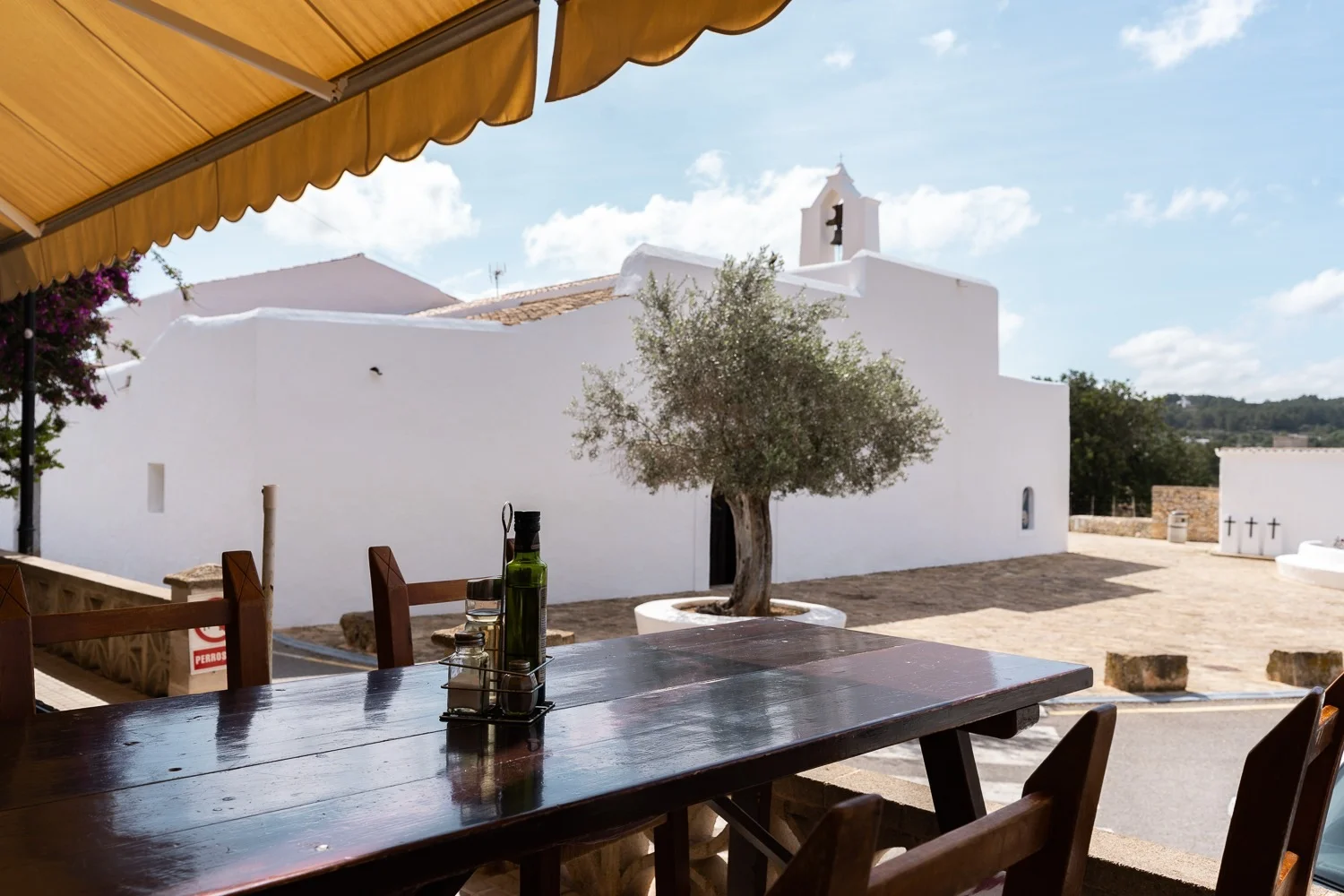
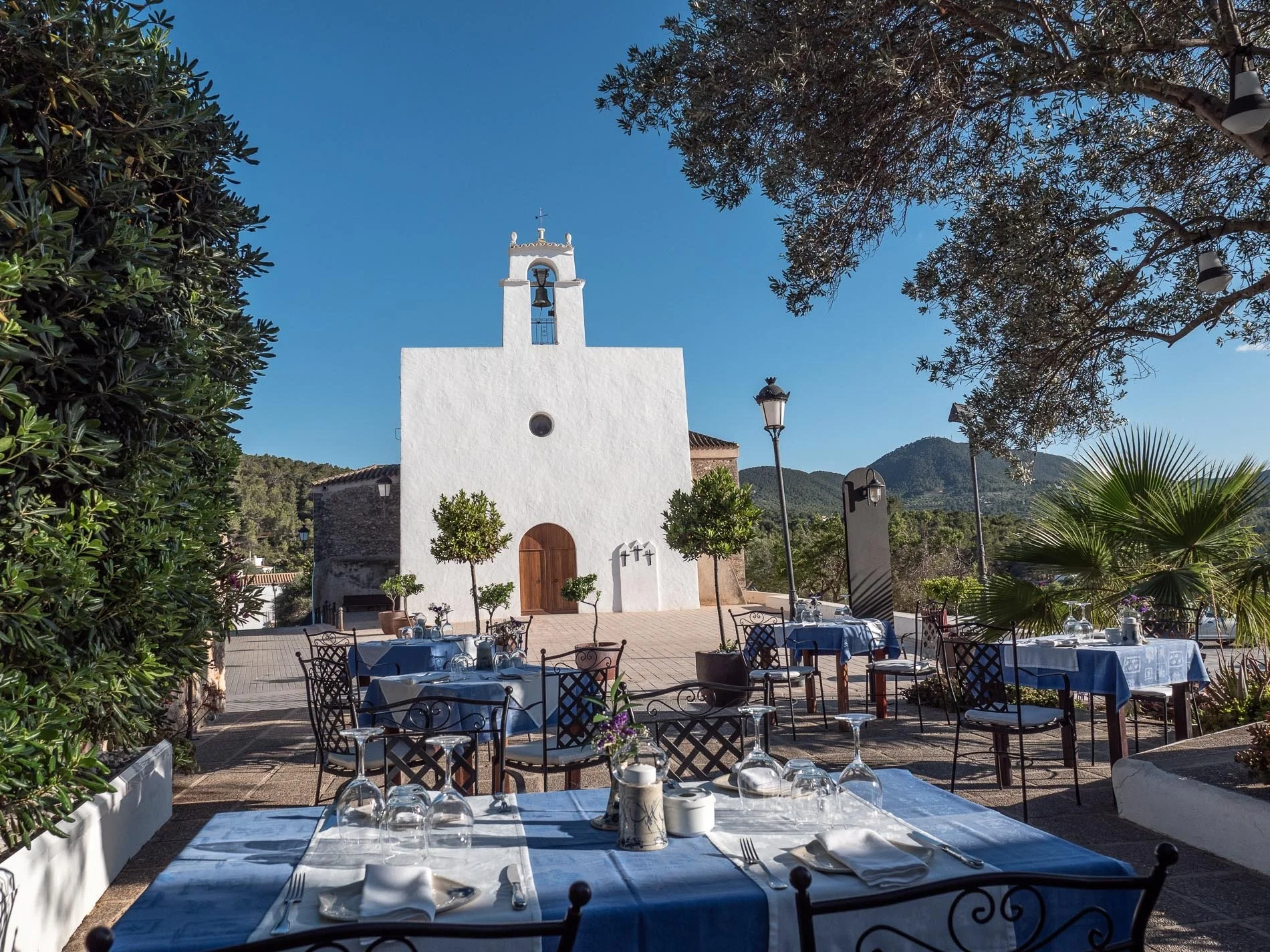
A table at Can Berri Vell facing the white church of Sant Agustí
The Village Edition · Ibiza, SpainA turning, a square, somewhere you want to stay.

The road
inland.

Paintings above a sandwich bar, news collected with the post, a tortilla facing the church. The inland villages tell their stories around a table.

Step inside ↓
Sant Agustí / a village that becomes the evening
The Village EditionIbiza · The Journal

Take the inland turning. There is a table in the sun, and the afternoon can wait.

It is easy to drive through an Ibiza village and remember only the turn you needed. Stop, and the same few buildings begin to explain one another. The church faces the tables. A shop serves several purposes. Beyond the houses, cultivated ground reaches towards the trees. What looked like a small interruption in the journey becomes a place with its own centre of gravity.

Food is often the easiest way in. A ham bocadillo at Bar Costa puts you in the social current of Santa Gertrudis. At Anita, the old mailboxes suggest how much of the countryside once passed through a single bar. In Corona, a tortilla and a terrace give the fields somewhere to lead. Sant Agustí becomes especially persuasive when you have booked dinner.

These are places to spend part of a day, with different pleasures and different scales. Pick one that makes you curious. The useful discoveries tend to happen after the first circuit of the square.
For company

Santa Gertrudis brings a village square, cafés, browsing and contemporary island life together.

For a story

Sant Carles pairs Ca n’Andreu des Trull with Bar Anita. Sant Joan’s old shop and Sant Miquel’s hilltop church offer two more northern stories.

For fields and a table

Sant Mateu and Santa Agnès make a natural northern pairing. Sant Agustí is a separate western evening, with two distinct Can Berri addresses.

The inland turning

A little map.
A lovely detour.

Follow a name into its story. Choose a couple of villages, then leave enough afternoon between them.

The villages of Ibiza, a little inlandAn original illustrated sketch showing Santa Gertrudis, Sant Carles, Sant Joan, Sant Miquel, Sant Mateu, Santa Agnès and Sant Agustí. Each village name links to its story below.Santa GertrudisSant CarlesSant JoanSant MiquelSant MateuSanta AgnèsSant AgustíEivissaSant AntoniSanta EulàriaNIbizaa little further inland…

An original sketch of the island. Village positions are approximate; this is a little inspiration for your route.

The sociable centre

Santa Gertrudis.
Pull up a chair.

A ham bocadillo, a wall of paintings and the company of the square.

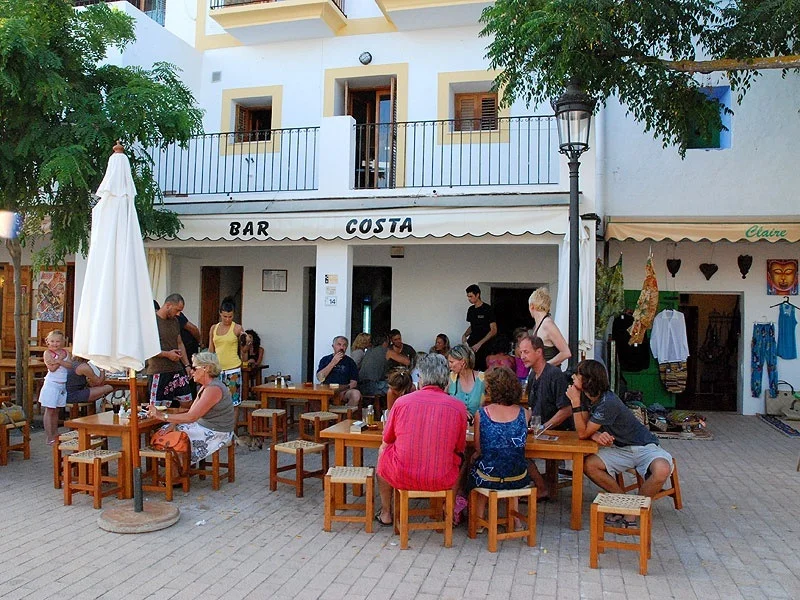
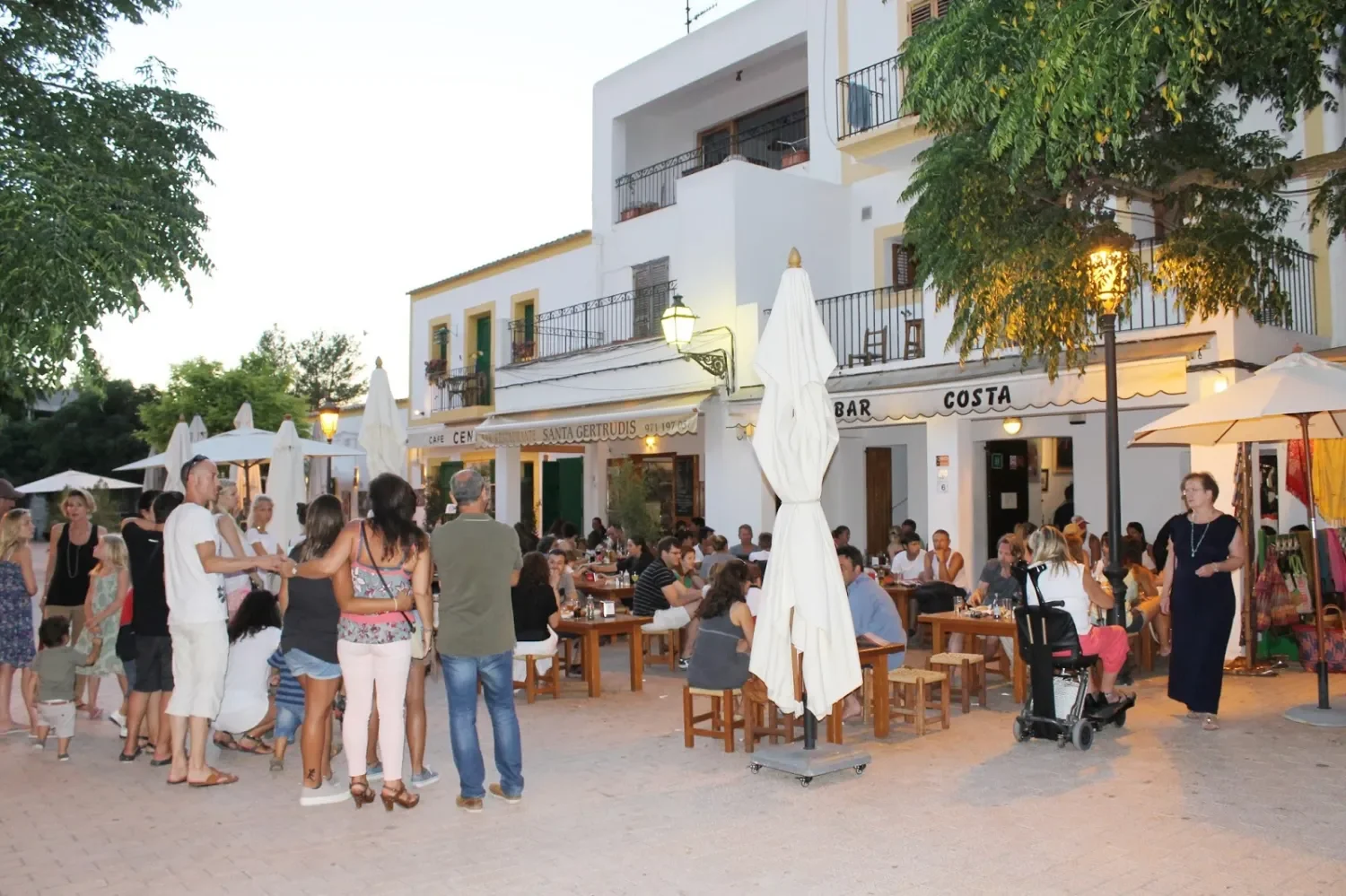
People talking and dining outside Bar Costa in the pedestrian centre of Santa Gertrudis
Santa Gertrudis / the company outside Bar Costa
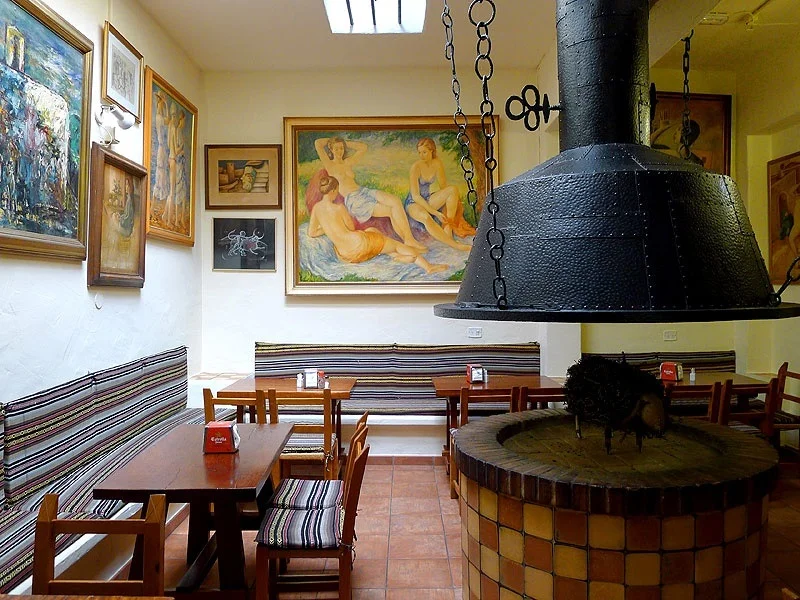
Paintings above wooden tables and a central fireplace inside Bar Costa
Bar Costa / art above the everyday · Photo: Xescu Prats

At Bar Costa, the terrace puts you close to village life. Low wooden stools and small tables gather opposite the church; people arrive, recognise someone, reconsider leaving. Order a ham bocadillo and you have given yourself a good reason to watch it all. Toasted bread, tomato and the savoury pull of jamón make a satisfying lunch without asking the afternoon to become a formal restaurant occasion.

Go inside too. Paintings cover the walls above wooden tables and the central fireplace. Local writer and photographer Xescu Prats traces the collection to the bar’s relationship with artists, including Andrés Monreal, who offered paintings in payment for what he owed. Work by other artists followed. Knowing that makes the crowded walls feel connected to the room’s everyday life: this is art accumulated through exchanges across a bar.

People seated on low wooden stools at Bar Costa’s terrace in Santa Gertrudis
Bar Costa / a table in the square · Photo: Xescu Prats
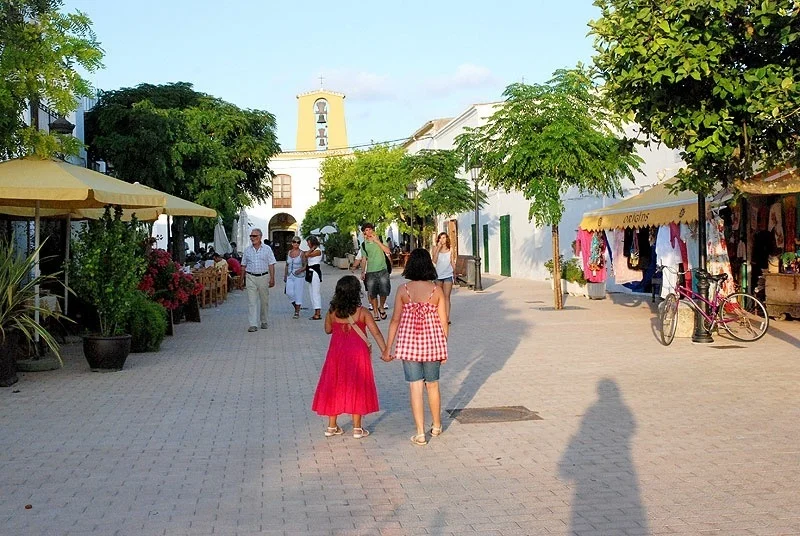
People walking along a sunlit pedestrian street towards Santa Gertrudis church
Santa Gertrudis / the afternoon on foot · Photo: Xescu Prats

Outside, Santa Gertrudis de Fruitera is unusually easy for a group with different interests. The pedestrian streets and small shops allow someone to browse while someone else stays at the table. You can separate for a little while and meet again without a transport plan. The Coffee Edition has the fuller café choices, including Musset; here, the pleasure is how readily the village accommodates everyone’s different pace.

The church’s white walls and ochre detail give you a reference point as you wander. Return towards the square when you have finished looking at clothes, objects or whatever first drew you down a side street. By then, the bar stools may be occupied by another group and the table that was in the sun may have slipped into shade. Santa Gertrudis is rewarding precisely because the scene carries on while you are elsewhere.

An everyday meal, with far more to look at than you expected.

Rooms that explain a life

Sant Carles.
The house behind the view.

Ca n’Andreu des Trull opens a door into the country life that shaped the north.

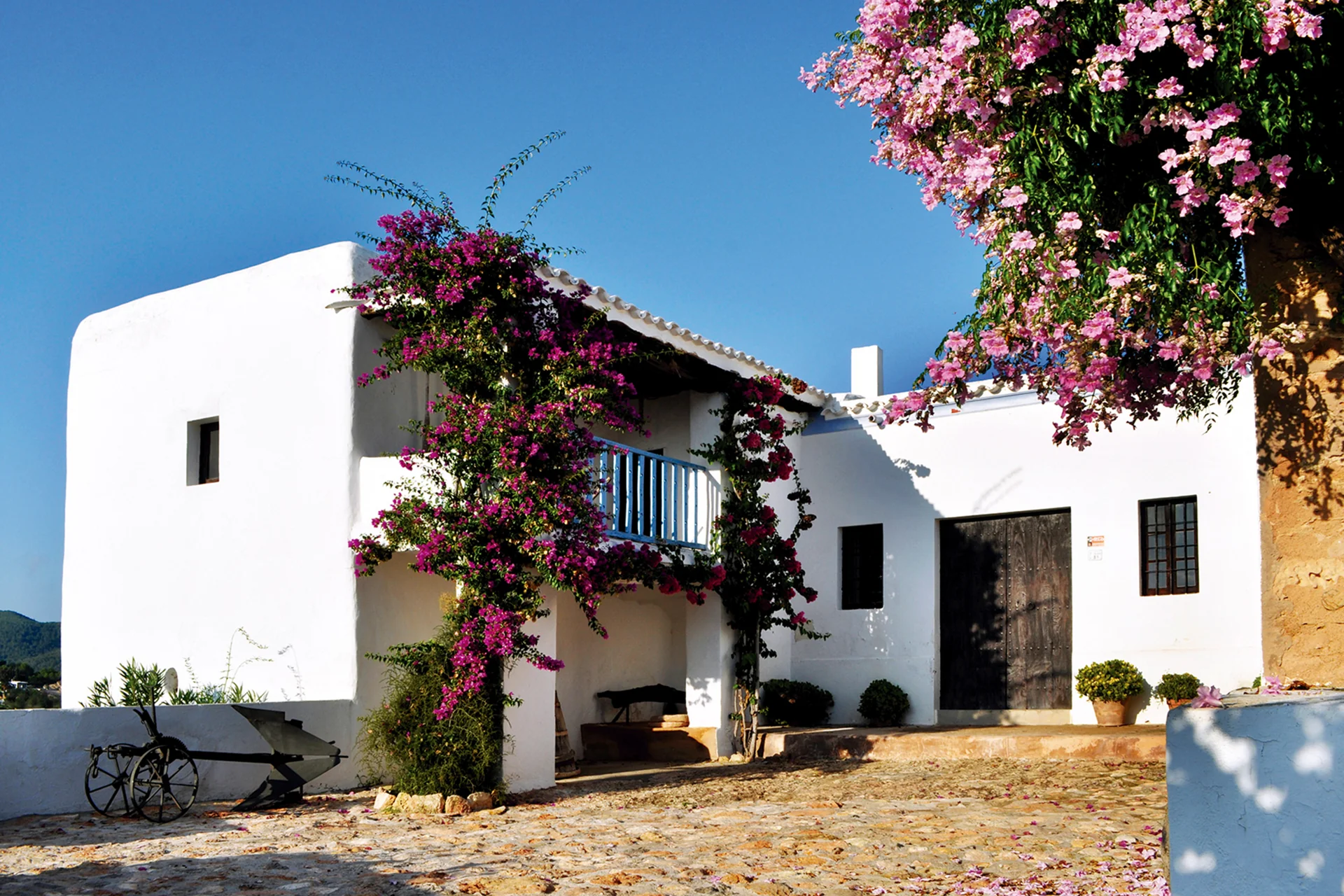
White farmhouse buildings with a balcony, stone paving and pink bougainvillea.
Ca n’Andreu des Trull / Another island life

The white country house is one of Ibiza’s most familiar forms. Near Sant Carles, Ca n’Andreu des Trull makes it possible to look beyond the outline. Documented from 1730, the house preserves domestic and agricultural spaces: rooms for living, storing and working, with the oil press that gives the property its name.

Begin with the porxo, the central room around which the household was organised. Follow the connections to the kitchen and other rooms, then notice how the work extends outside to the threshing floor and cistern. The interest is practical. Water had to be kept, a harvest handled, food stored and people accommodated. A beautiful arrangement can be the result of solving those everyday problems well.

Check the museum’s visiting hours before coming. Afterwards, the houses you pass on the road will be easier to imagine from within. Carry that thought into Sant Carles itself: the farmhouse tells you about the household, while the bar beside the church tells you where people went to meet.

The village meeting point

Bar Anita.
There is news at the bar.

Ca n’Anneta’s mailboxes belong to the same story as its tables.

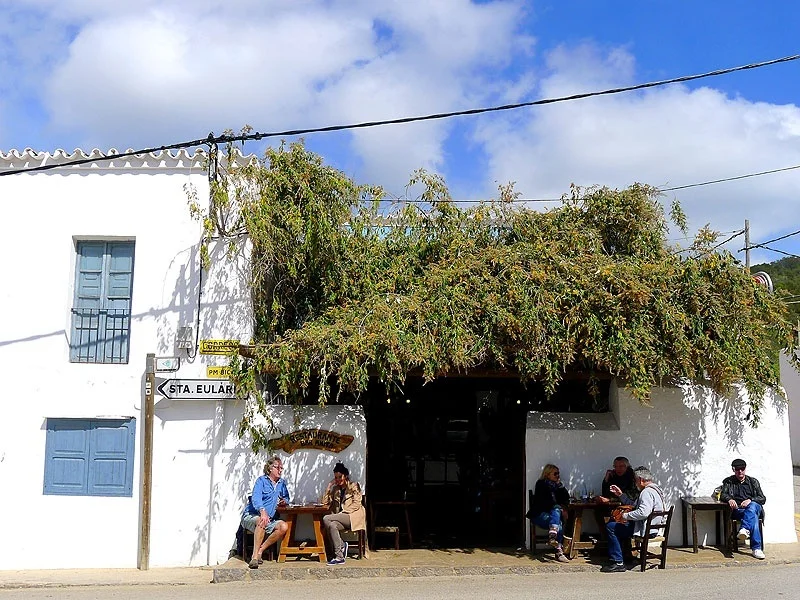
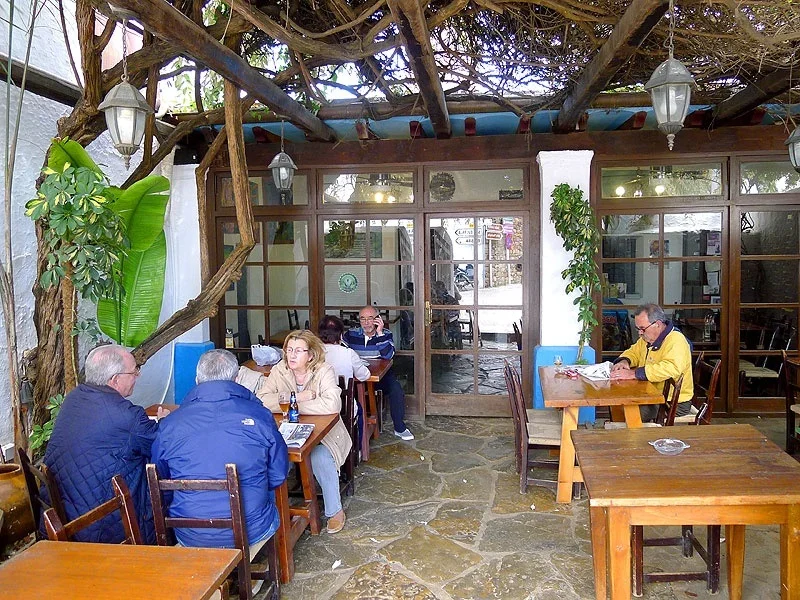
People sitting outside the green-covered entrance of Ca n’Anneta in Sant Carles
Bar Anita / the village meeting point · Photo: Xescu Prats
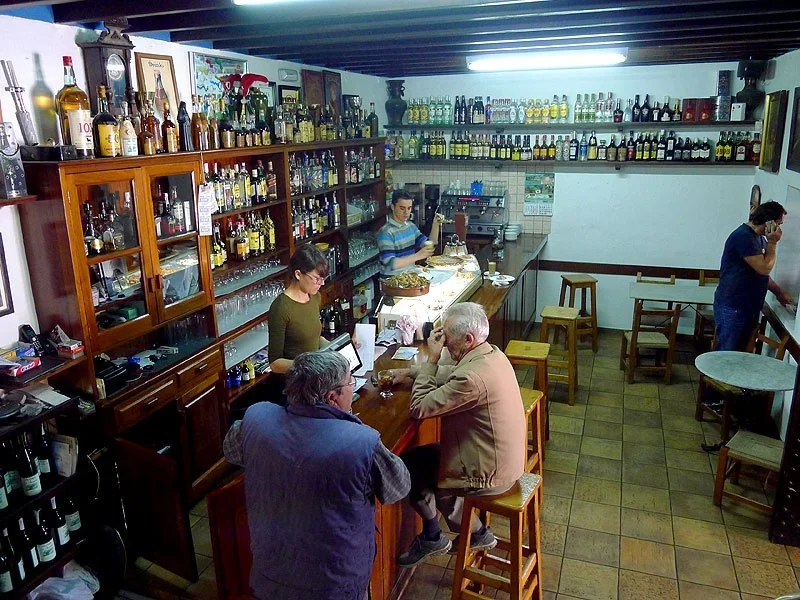
Customers seated at the counter inside Bar Anita among shelves of bottles
Ca n’Anneta / the room in use · Photo: Xescu Prats

At Bar Anita, beside Sant Carles church, the covered terrace and the well-used interior make a convincing invitation to lunch. Wood, bottles, greenery around the entrance: the appeal lies in things that have a job to do. You can sit outside in the shade or step into the room around the bar and appreciate how many kinds of visit one address can hold.

Known locally as Ca n’Anneta, the establishment grew from a village shop into a meeting place for neighbours and the people drawn to live in Ibiza’s countryside. It also provided a postal address for scattered rural homes. The mailboxes remain. Coming here once meant discovering what had arrived from elsewhere as well as what was happening around the village.

People talking at wooden tables beneath the shaded terrace roof of Bar Anita
Ca n’Anneta / time at the table · Photo: Xescu Prats

That detail changes the way you look at the room. A bar can be part of the infrastructure of a place: a counter where practical errands turn into conversations, where people with different reasons for arriving overlap. There is no need to imagine that you have stepped outside the present. You are simply eating somewhere that has been useful to a community in more ways than one.

Order for the table and see how long lunch takes. The house-made hierbas are part of Anita’s identity; a bottle to take home is a good option when you are driving. Sant Carles and its countryside provide plenty to explore, but the most enjoyable part of the outing may turn out to be the stretch of time you spend here with nothing left to collect.

Coming here once meant collecting news from somewhere else, as well as hearing what was happening nearby.

A pause in the north

Sant Joan.
A shop, a street, a square.

Look at the everyday village as well as its Sunday market.

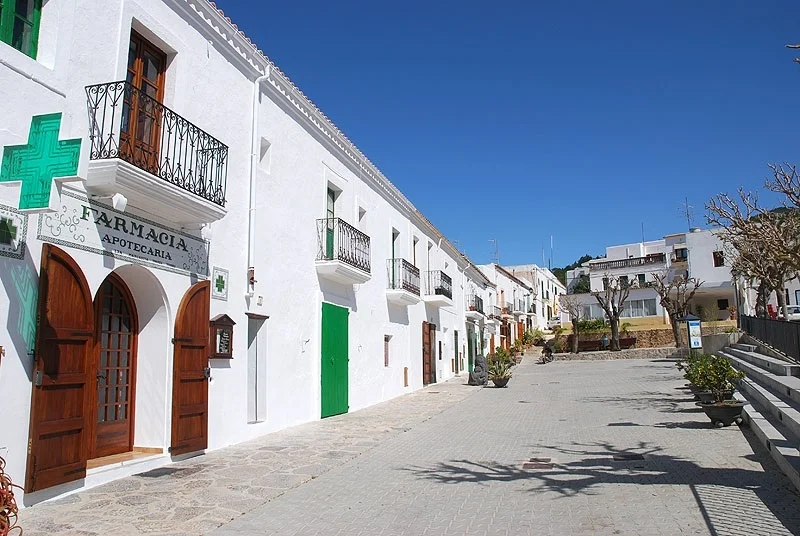
Whitewashed houses, green doors and a quiet street in Sant Joan de Labritja
Sant Joan / the village at its own pace · Photo: Xescu Prats
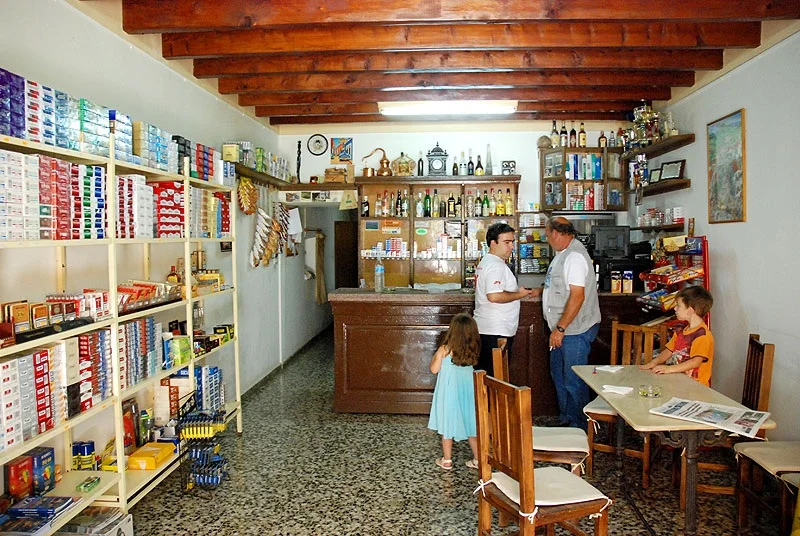
People inside Can Vidal’s shop and bar in Sant Joan, with shelves and a wooden counter
Can Vidal / a village room with several purposes · Photo: Xescu Prats

After the wooded roads of the north, Sant Joan de Labritja brings your attention back to doors, windows and people nearby. Whitewashed houses stand close along the main street, with the small town hall and church within a short walk. The centre is compact enough to explore without deciding on a route through it.

Can Vidal is an especially good reason to look more closely. The old estanco also serves as a stationery shop and a village gathering place. Shelves, a wooden counter and several everyday functions share one room. Someone can be there for an errand while someone else has time for a conversation; the business makes sense at both speeds.

Walk the centre, then choose a terrace. Sant Joan suits an afternoon when a look around, a drink and perhaps lunch are sufficient. Its Sunday market brings a different energy, covered in the Market Edition. On another day, the smaller exchanges and the buildings around them have more of your attention. If you continue to Sant Miquel, make it a second stop rather than another turning passed without getting out.

The village looking back

Sant Miquel.
Look back from the hill.

The church’s position explains as much as its architecture.

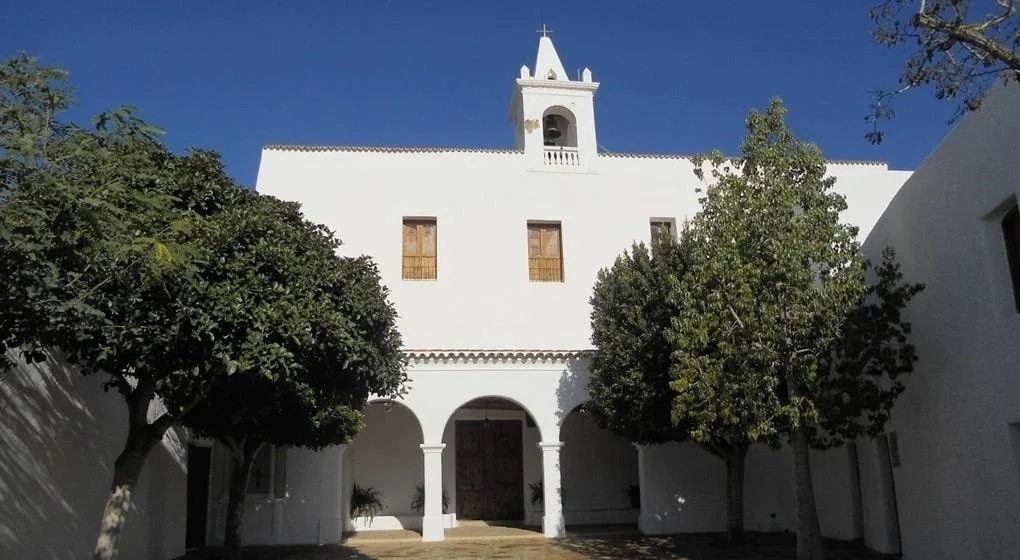
White Sant Miquel church with shaded arches and trees in front.
Sant Miquel / The hilltop church

In Sant Miquel de Balansat, take the public approach towards the church on the Puig de Missa. The climb changes the settlement’s proportions. What was a landmark above the village becomes a substantial building beside you, and the surrounding land opens into view. Its defensive character belongs to a time when religious life and refuge could share the same walls.

Inside, when access permits, the T-shaped plan and chapels offer another scale of detail. Geometric and floral frescoes soften the impression of the strong exterior. If the church is closed, the public approaches and elevated setting still give the visit a clear purpose. This is a good short stop for anyone who likes to understand why a building occupies the place it does.

Pair it with Sant Joan for two different versions of the northern village: one gathered along a street, the other understood from a hill. There is no need to turn either into an exhaustive architectural tour. A careful look can be enough to change how the next stretch of countryside appears from the car.

The agricultural north

Sant Mateu.
The fields are the centre.

A small church within a wide agricultural landscape.

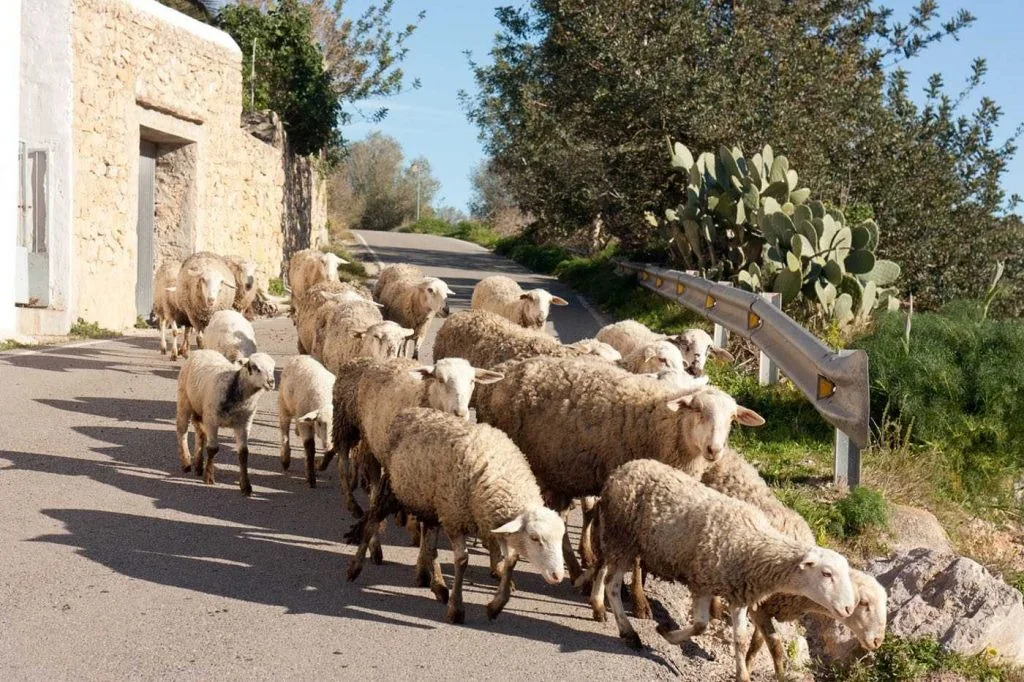
A flock of sheep moves along a narrow village lane beside stone walls and prickly pear.
Sant Mateu / Where the fields begin
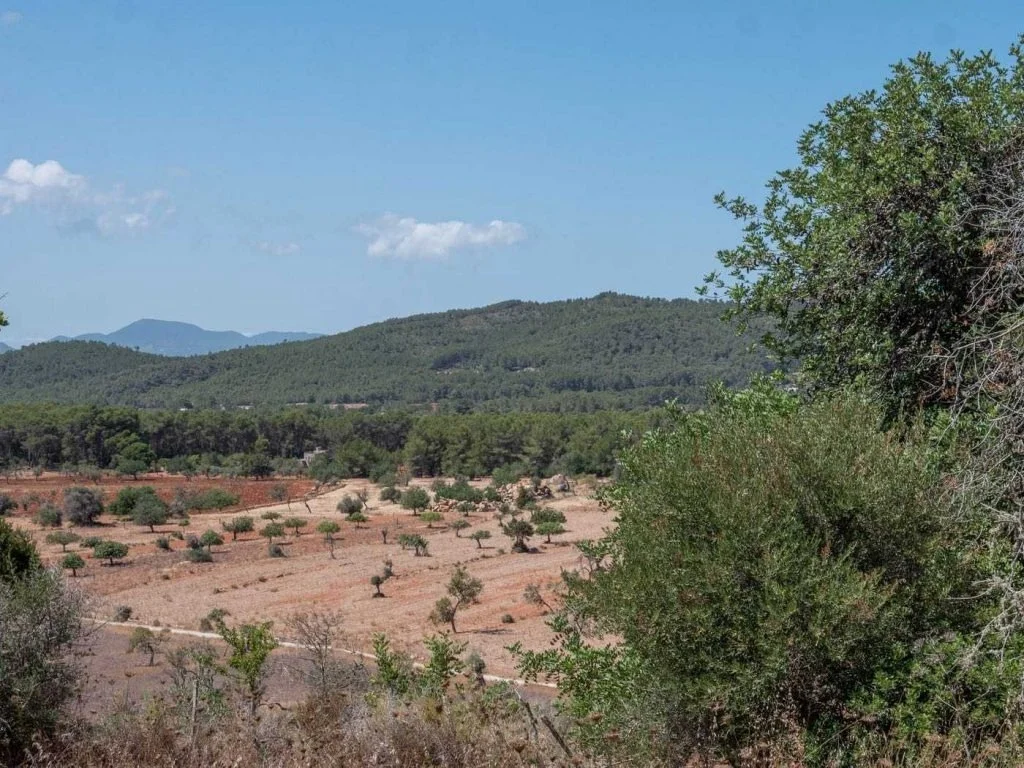
Dry cultivated fields, trees and wooded hills on the plain around Sant Mateu
Sant Mateu / the land comes first

At Sant Mateu d’Albarca, the settlement makes sense in relation to its plain. Vineyards and cultivated plots occupy the wider view; the church marks a point within it. This is a particularly appealing stop when you have spent several days on the coast and want to see the island engaged in something other than entertaining you.

Look at the church’s modest arrangement, with its bell gable towards a corner and the porch at the other end. Then turn back towards Pla d’Albarca. The scale changes from the small details of one building to the work of many fields. Boundaries, vines and the open spaces between them make the agricultural north visible in a way that a drive through woodland can conceal.

For a village visit, the centre and public roads provide the view; the cultivated land remains private working ground. The official Sant Mateu–Es Camp Vell walk is a separate undertaking of 10.7 kilometres, graded high difficulty. Use the Hiking Edition if that is the day you want. Otherwise, keep the visit modest and continue towards Corona for lunch.

The square after the fields

Santa Agnès.
The tortilla is the plan.

At Can Cosmi, a simple lunch has exactly the right setting.

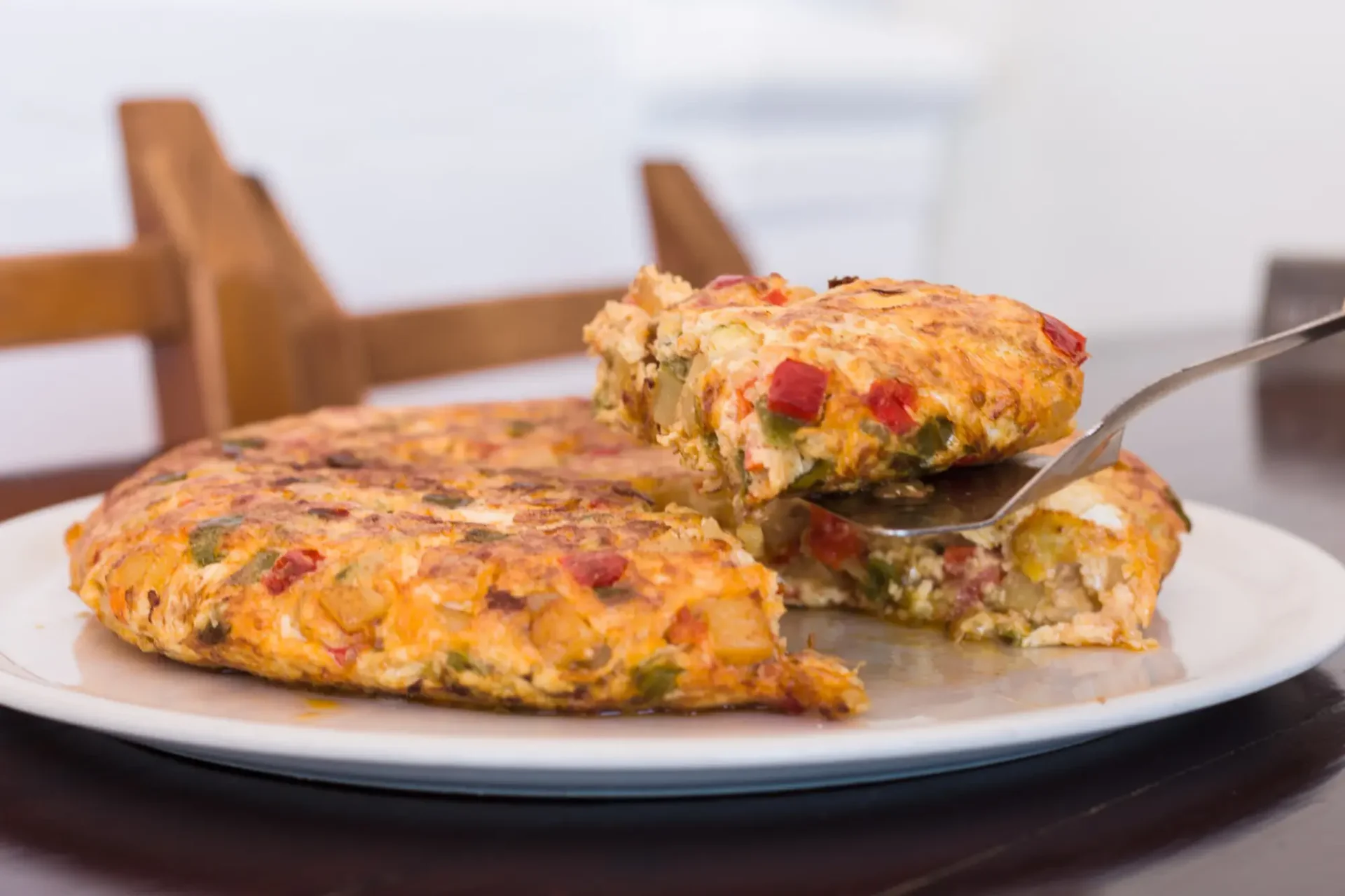
A thick vegetable tortilla with a slice lifted from the plate at Can Cosmi
Can Cosmi / the reason to stop for lunch
Tables beneath Can Cosmi’s awning facing Santa Agnès church
Can Cosmi / the square after the fields

A thick vegetable tortilla is an excellent reason to turn off the road. Can Cosmi’s version gives the Santa Agnès outing an immediate centre: golden outside, colourful through the cut slice, substantial enough to make a table of friends pay attention. The bar is known for its tortillas; ask how they are served and what else is on the current menu.

The terrace faces the small church of Santa Agnès de Corona. Can Cosmi began in 1951 as a grocery and bar, and the square still gives lunch the proportions of a village meal. There is something pleasing about sitting under the awning with the white church across from you and the fields only a short distance away. The landscape has led to somewhere you can eat.

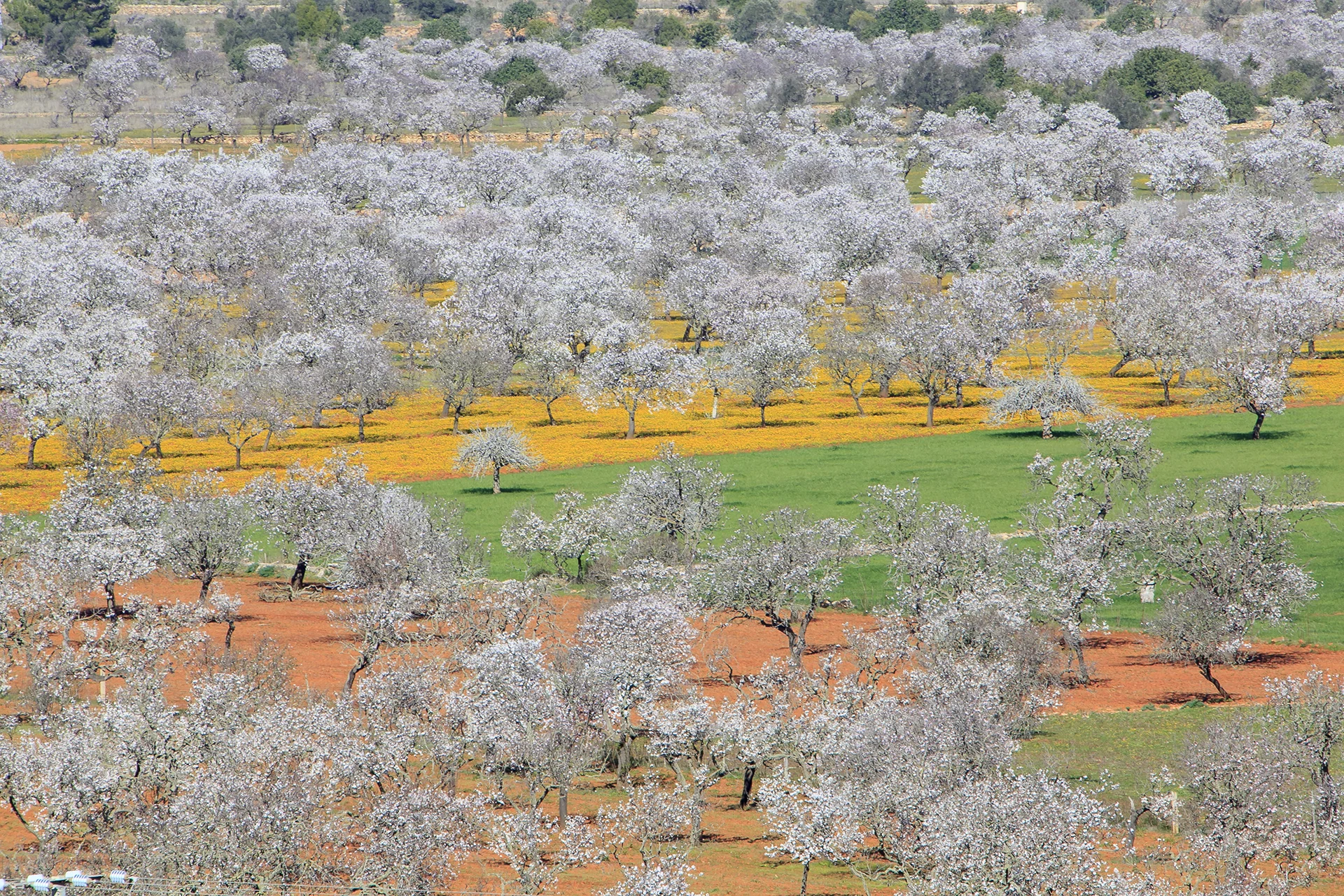
Almond trees in blossom across the cultivated plain of Santa Agnès de Corona
Pla de Corona / almond blossom season

Explore the public routes around the plain before or after lunch. In blossom season, almond trees can make Corona look extraordinarily delicate. At other times, trunks, cultivated earth and stone have a stronger, more spare beauty. The photograph is seasonal; the setting is worth visiting beyond it.

Sant Mateu and Santa Agnès make a natural agricultural pairing. For a longer outing, the official 6.8-kilometre Pla de Corona walking circuit reaches the coast around Sa Penya Esbarrada and Ses Margalides; the Hiking Edition has the distinction between a village pause and a proper walk. Either way, the tortilla gives the day a deliciously specific destination.

A walk through the fields, a seat beneath the awning, something warm arriving in the middle of the table.

Stay for dinner

Sant Agustí.
Before the lamps come on.

Arrive with daylight left, then watch a village become your dinner setting.

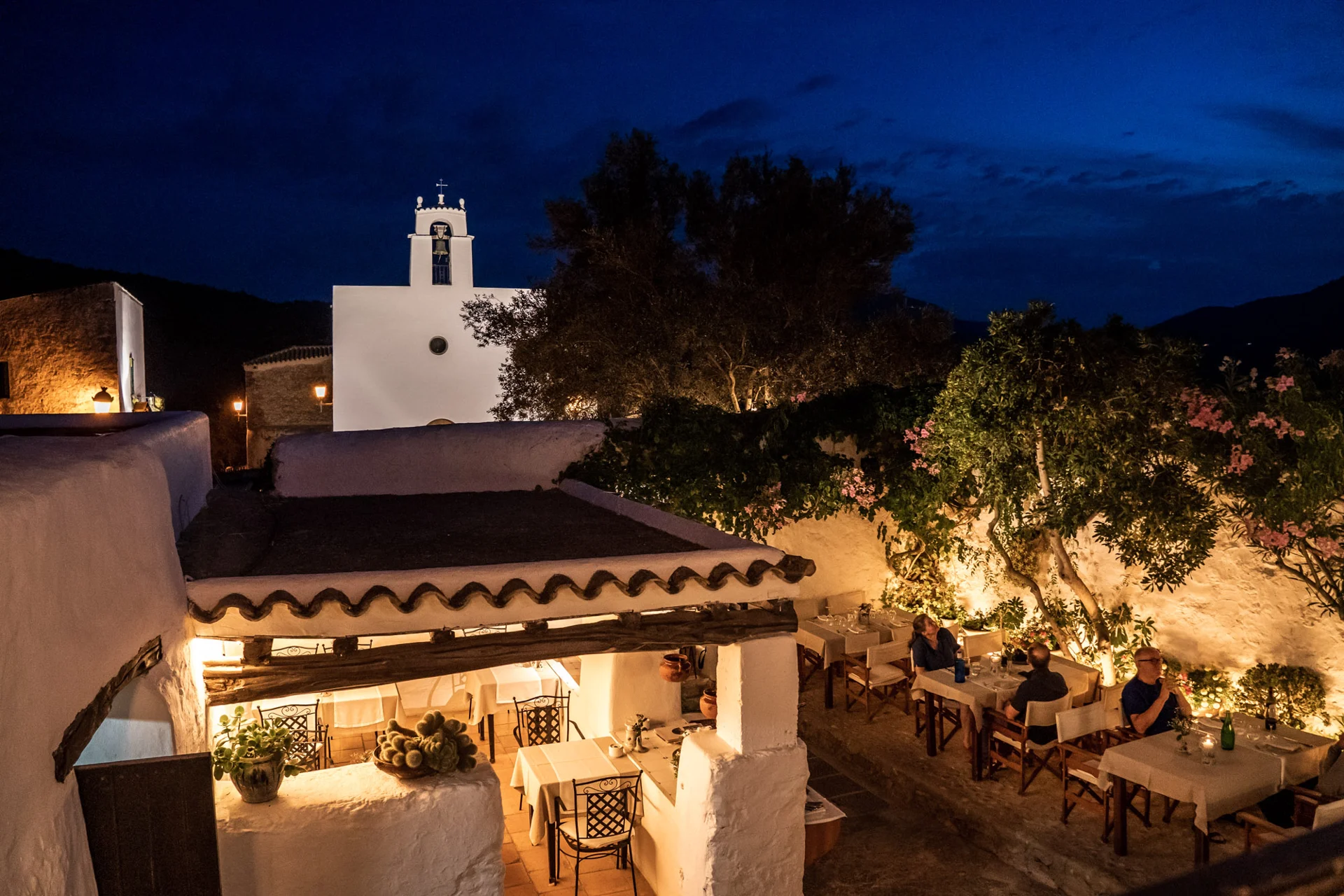
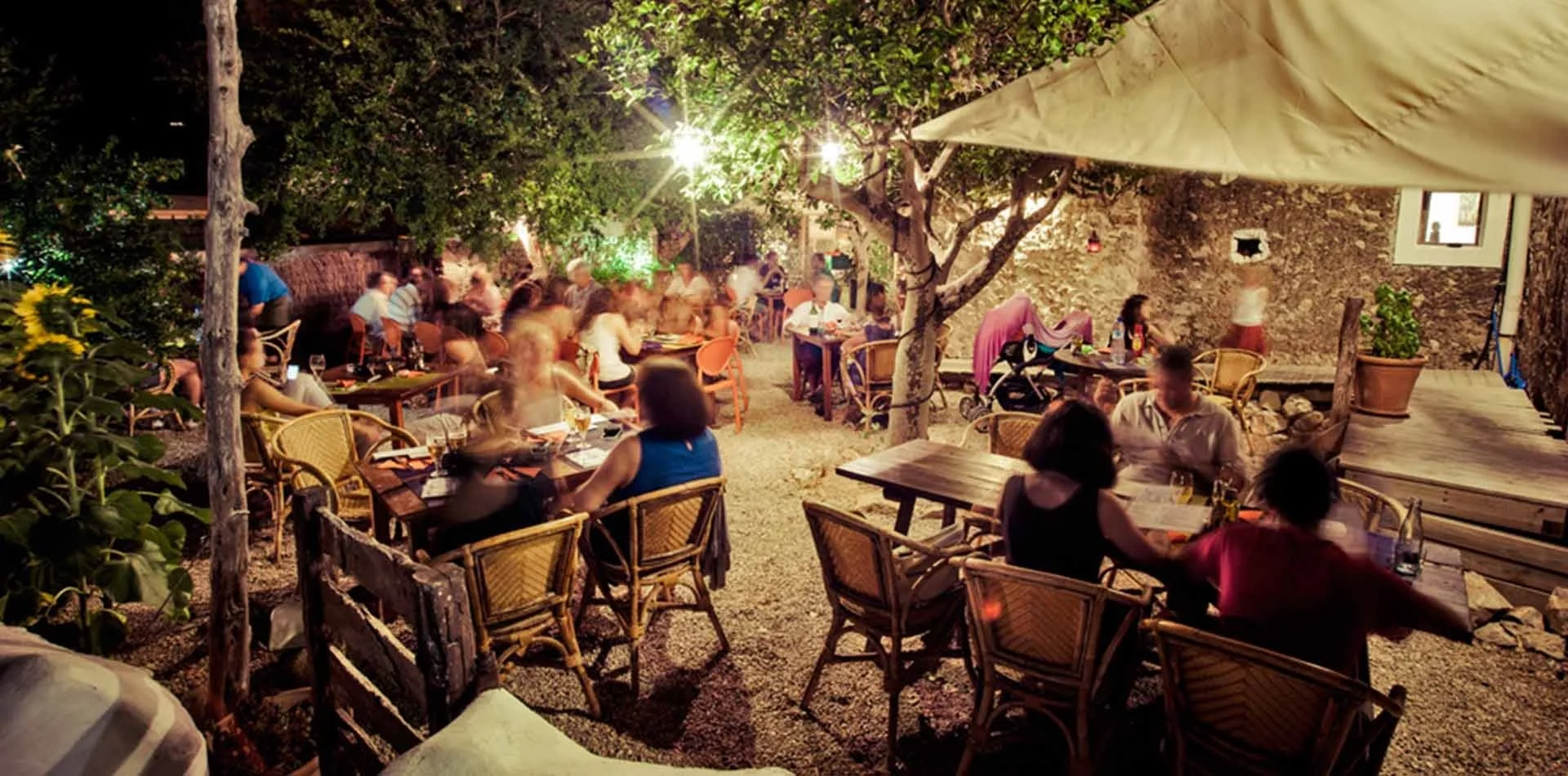
Guests dining at Can Berri Vell under warm lamps with Sant Agustí church behind
Can Berri Vell / the village becomes the evening
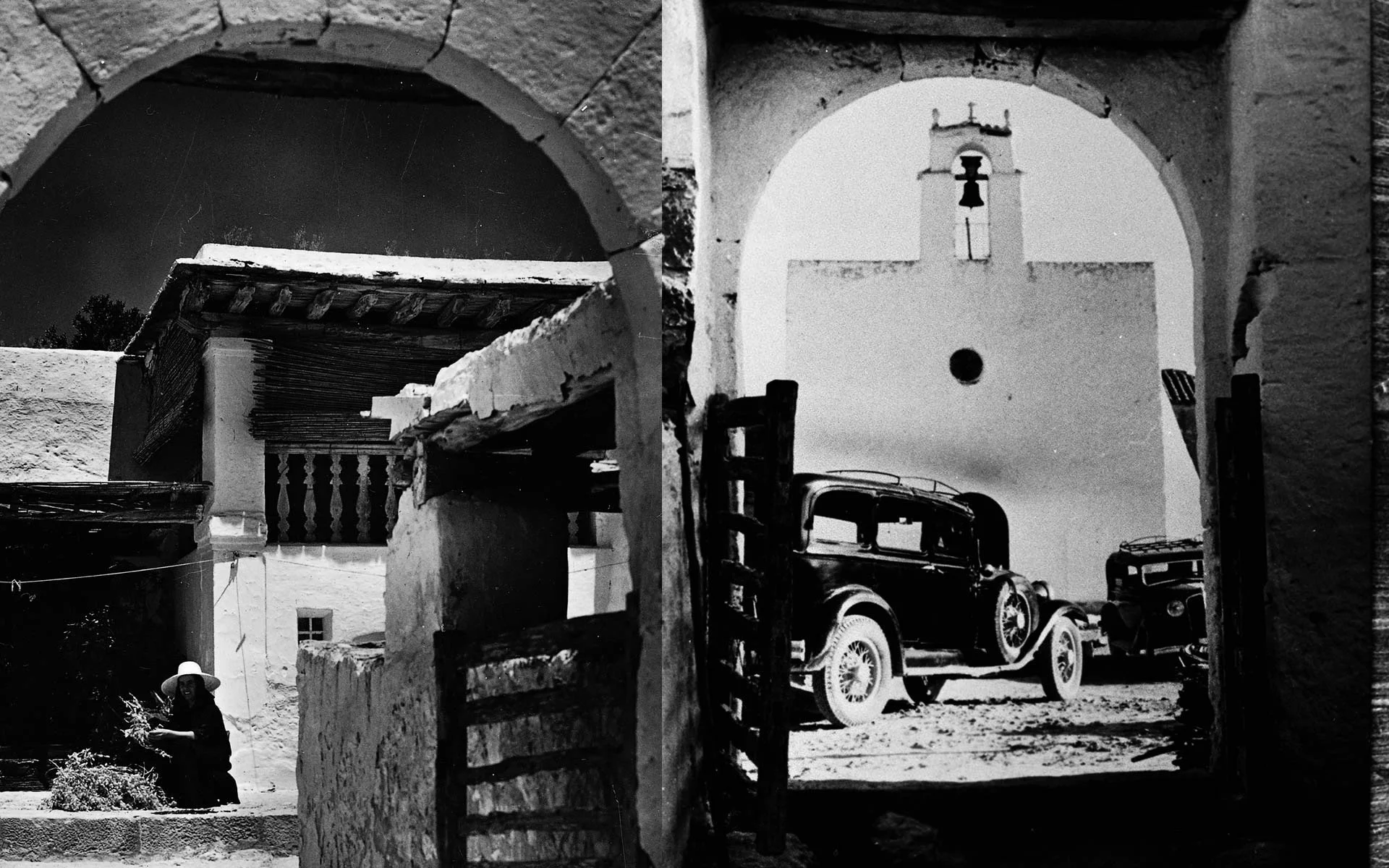
An archival black-and-white photograph of Sant Agustí’s church, buildings and parked cars
Sant Agustí / an earlier view, from Can Berri Vell’s archive

Sant Agustí is especially inviting when you have a table booked nearby. Arrive early enough to walk the public square, where the church, parish buildings and traditional houses remain close enough to read together. Lime, stone and foliage catch the last light differently. You have time to notice that before the meal begins.

The archival photograph in Can Berri Vell’s history offers an earlier view of the same square: the church, the gate, the old cars. Look at the familiar forms and the changed details. A village contains both kinds of continuity—the buildings that persist and the ordinary arrivals that keep happening around them.

Then the lamps come on and the restaurant tables become the foreground. Two different Can Berri addresses offer distinct evenings here. Being precise about the booking is worthwhile; both are more enjoyable once you have seen the square outside them.

The table after dark

The house
or the garden?

Can Berri Vell and Bar Can Berri give Sant Agustí two different dinner moods.

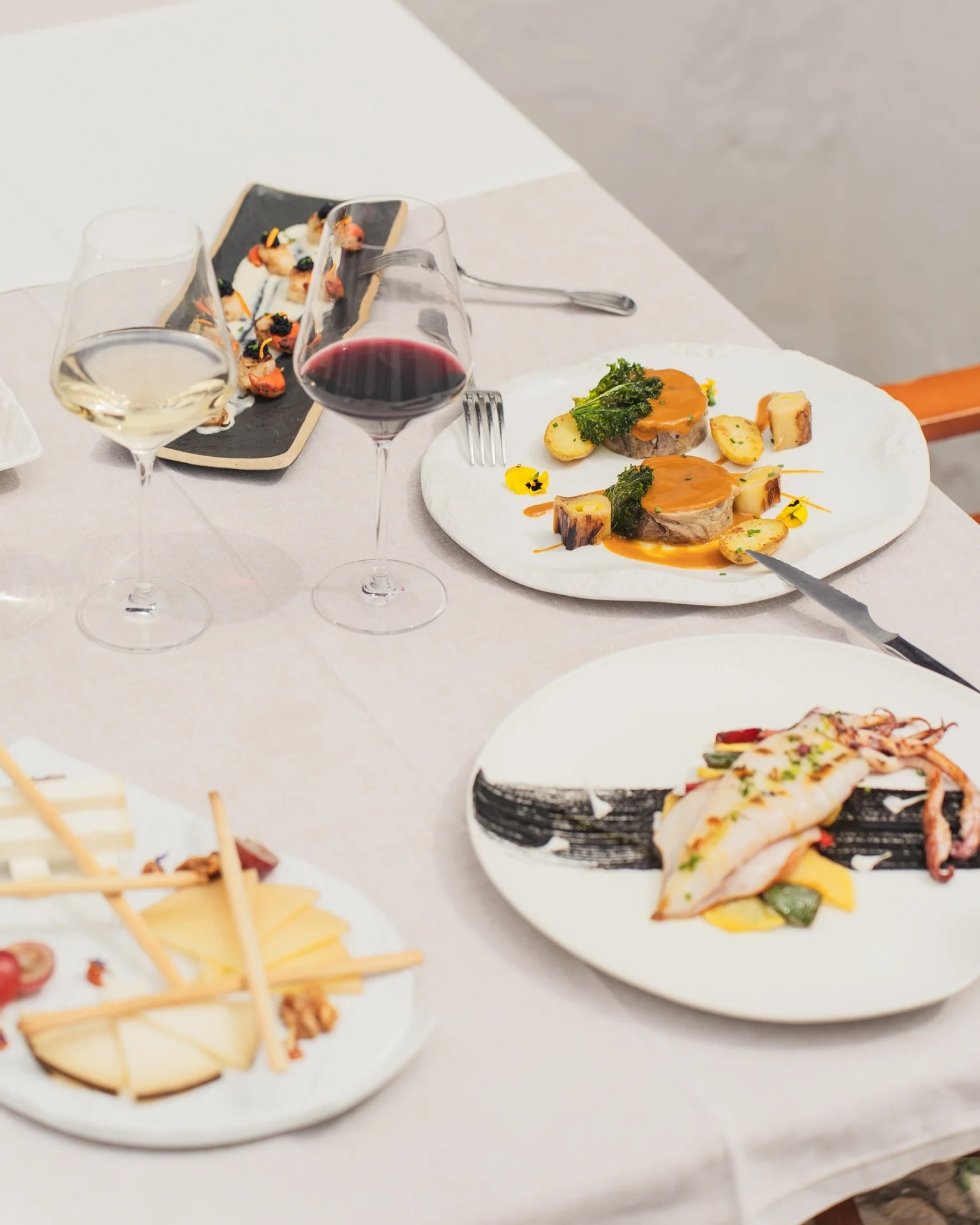
A set dining table with plated food and wine at Can Berri Vell
Can Berri Vell / dinner in an old house
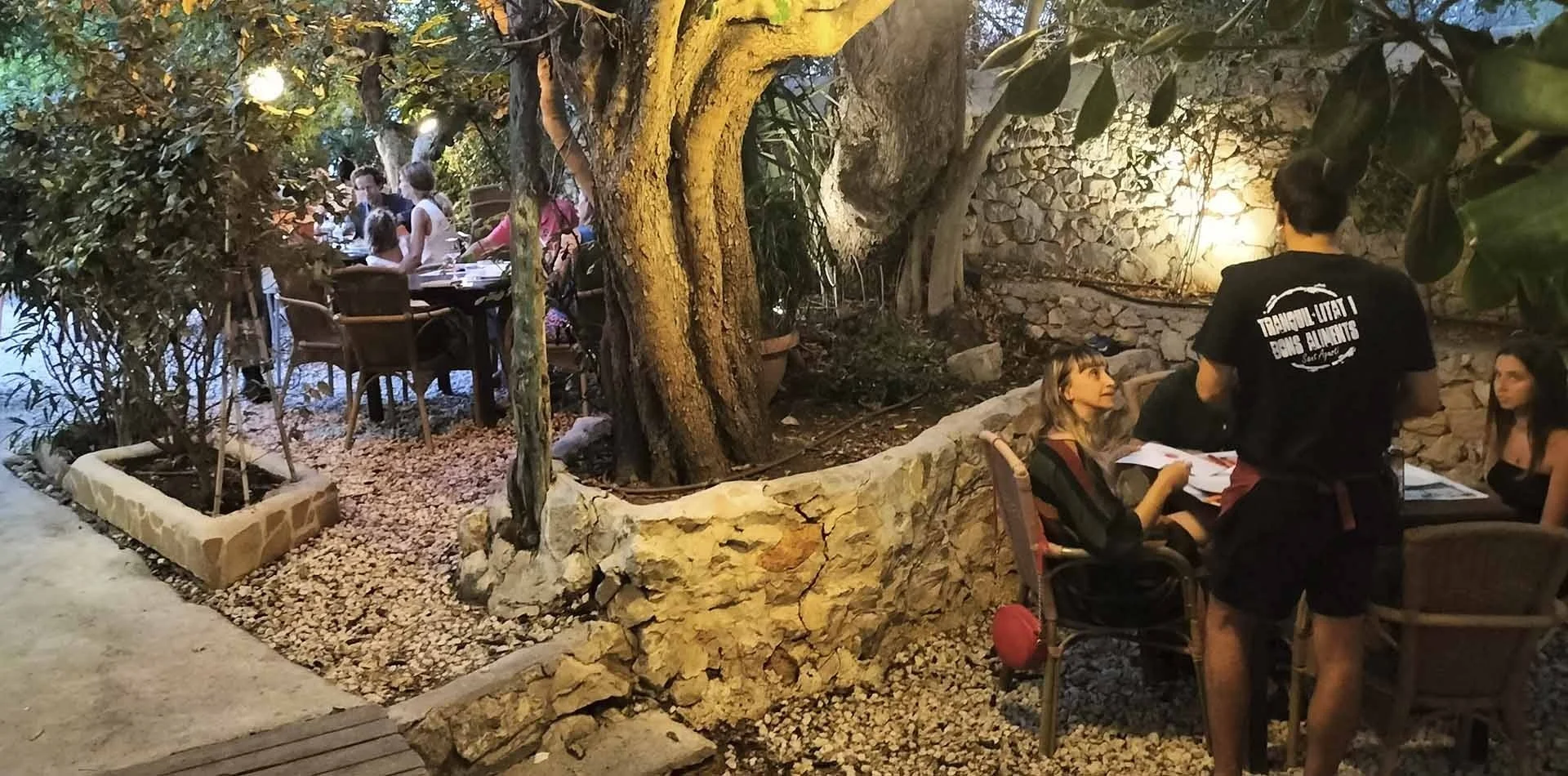
People dining beneath trees and lights in the garden of Bar Can Berri
Bar Can Berri / the garden after dark

Can Berri Vell occupies a house documented from the seventeenth century, opposite the church. Its terraces make the old village part of the restaurant: the house around you, the building across the square and Mediterranean cooking at the table. Choose it for a considered dinner in a setting that deserves some daylight at the beginning and a long evening afterwards.

Bar Can Berri is a separate place. Tables gather in a garden under orange and pomegranate trees, with lights above the foliage and a more informal sense of company. The menu combines local ingredients with wider influences; zucchini-and-mint croquettes and slowly cooked lamb are among the dishes on the current menu. Ask about that evening’s programme if live music is part of the attraction.

Diners and a member of staff among the trees and tables in Bar Can Berri’s garden
Bar Can Berri / the garden in motion

The garden’s appeal is easy to picture at the scale of your own group: chairs turned towards one another, food passing along the table, someone returning to a conversation after the plates arrive. Book the address you actually mean, settle the journey home and let dinner occupy the rest of the evening. The village has already done the sightseeing part.

You can imagine your friends fitting into the scene without changing it very much.

Give the day a shape

Follow an interest,
then stop.

An outing is more satisfying when the places have something to say to one another.

Santa Gertrudis can comfortably fill an afternoon of its own. Sant Carles connects the farmhouse at Ca n’Andreu with Anita’s social history. Sant Joan and Sant Miquel show two different northern centres; Sant Mateu and Corona belong together through their fields. Give Sant Agustí an evening built around dinner.

Check church access, museum hours and restaurant openings before setting out, then park considerately and keep gateways clear. These small practicalities let the visit become ordinary in the best sense: a walk, a look, a purchase, lunch. The place is already doing the interesting part.

Choose your rhythm

Which inland afternoon is yours?

A few ways to make the idea your own.

Santa Gertrudis lets a mixed group browse, pause and meet again without complicated logistics. Choose one café or meal as the anchor; let the streets and square fill the space around it.

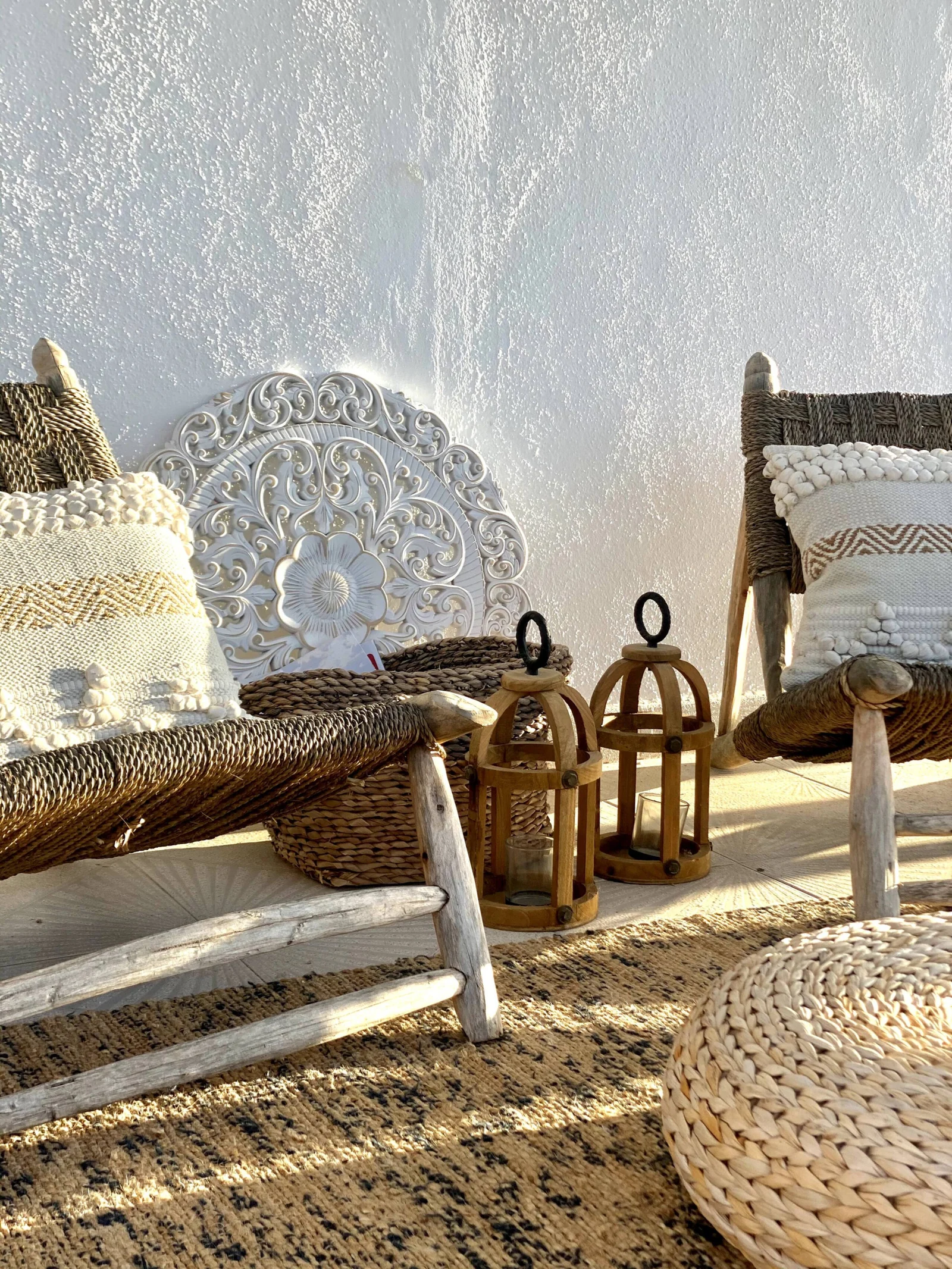
Woven chairs, cushions and wooden lanterns on the sunlit terrace at Can Saca
Can Saca / Sunlight on the terrace.

The hours in between

A place
for your people.

The first coffee. The last swim. The table where the stories get told again. Some of the best hours of the holiday happen at home.

At Ocho, you book directly with the people who own and care for our three villas. Tell us your dates, your people and the kind of Ibiza you have in mind. We’ll help you find your place.

A little Ibiza to take with you

Made to keep,
or share!

For the flight, the group chat or the person you wish was here. Keep the magazine. Pass the feeling on.

Download the PDF editionThe Village Edition · 29 pages · 6.6 MB

Send a little inspiration

Take the story with you.

The Village Edition magazine cover
Save the cover ↓

Make it
your Ibiza.

Three villas. A team who calls the island home.
A holiday that feels like yours.

Find your Ocho villa